Small and medium-sized housebuilders have long been the backbone of UK housing delivery. But right now, they’re under increasing pressure — and the consequences could be significant.
At the same time, there is a growing conversation around whether more efficient construction systems, with solutions like GDeck already demonstrating how this can be achieved, could help ease some of that pressure — particularly when it comes to cost, speed, and build complexity.
We’ll come back to that shortly.
A recent survey by the Home Builders Federation (HBF) highlights a growing challenge across the sector.
70% of SME housebuilders say current market conditions are preventing them from starting new sites.
That statistic alone tells a bigger story.
A Market Defined by Caution
Despite planning reform and clear government ambitions to increase housing supply, confidence across the SME sector remains low.
Only 41% of builders expect to increase housing starts in the next three months, while just 28% have a positive outlook on the market.
For many, the issue isn’t just planning — it’s viability.
Rising build costs, policy pressures, and ongoing affordability challenges for buyers are combining to create an environment where starting new developments carries more risk than ever.
Why SMEs Are Feeling It Most
Unlike larger developers, SMEs have less flexibility to absorb:
- Cost increases
- Delays in planning
- Fluctuating demand
This makes them particularly vulnerable to prolonged uncertainty.
The survey also shows that 57% of SME builders cite viability pressures as a key barrier, while 76% still see planning delays as a major issue — despite recent reforms.
Demand Remains a Critical Barrier
Even where planning is approved, demand is not guaranteed.
High deposits, stricter lending criteria, and elevated interest rates continue to impact first-time buyers — a key market for many SME developers.
Without stronger demand-side support, schemes that might have been viable a few years ago are now being paused or reconsidered entirely.
The Role of Build Efficiency in Viability
So where does that earlier point about construction systems come in?
While much of the industry focus is on planning and policy, there is an increasing recognition that how homes are built on site plays a critical role in overall viability.
For SMEs especially, improving efficiency isn’t just about speed — it’s about reducing risk, cost, and complexity.
This is where modern construction systems are starting to have a real impact.
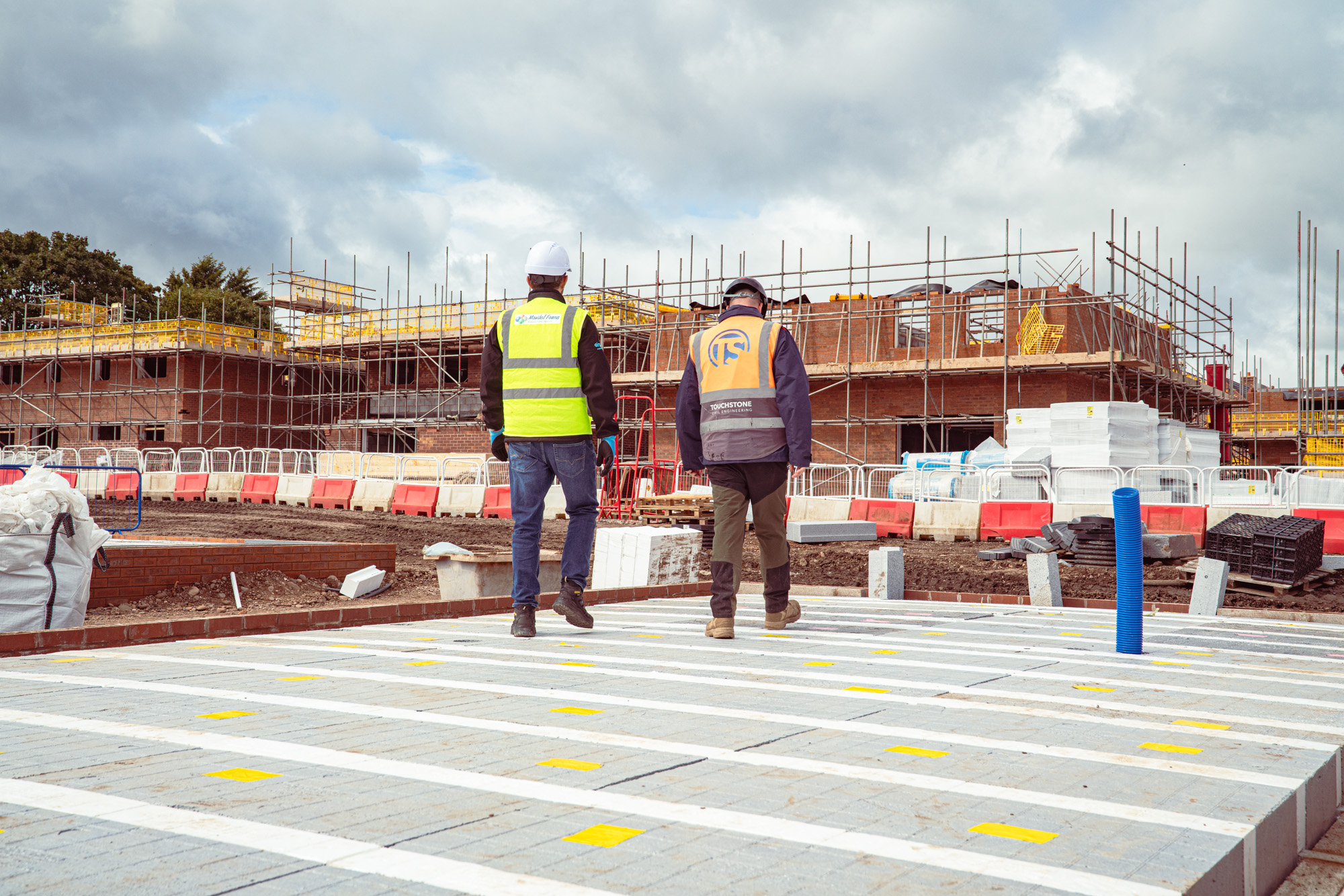
For example, insulated flooring systems like GDeck are designed to simplify traditional beam and block construction by combining structural elements with integrated insulation.
By reducing the need for additional materials, cutting, and heavy on-site processes, systems like this can help:
- Improve installation speed
- Reduce labour intensity
- Support more consistent build quality
- Lower overall site complexity
In a market where margins are tight and risk is high, these types of efficiencies can make a meaningful difference to whether a scheme progresses — or stalls.
Regional Differences Tell Their Own Story
The picture isn’t uniform across the UK.
- London shows the weakest confidence, with 57% of SMEs expressing a negative outlook
- Southern regions also remain cautious
- Meanwhile, Wales stands out as the most optimistic market, with 67% reporting a positive outlook
This highlights how local market conditions and policy pressures can significantly influence delivery.
The Impact on Future Supply
Perhaps most concerning is the impact on the future pipeline.
Over a quarter of SMEs are already planning to reduce land acquisitions, signalling a slowdown not just in current delivery — but in future supply as well.
At the same time, additional regulatory and cost pressures are looming, including:
- The Building Safety Levy
- Future Homes Standard
- Increases in landfill tax
Together, these could further impact scheme viability.
What Needs to Change
The HBF is calling for:
- A pause on new regulatory costs and levies
- A review of existing policy-driven cost increases
- Greater support for first-time buyers to stimulate demand
But alongside policy changes, there is also an opportunity within the industry itself.
Exploring more efficient construction methods, simplifying build processes, and reducing on-site risk could all play a role in improving delivery outcomes — particularly for SMEs.
Final Thought
SME housebuilders play a critical role in delivering homes across the UK.
But if current conditions continue, their ability — and appetite — to build will remain constrained.
And without them, meeting housing targets becomes significantly more difficult.
The challenge isn’t just unlocking more sites — it’s making those sites viable to build.